Beef Improvement Federation Research Symposium and Convention - Boise, Idaho:
Genomic testing is adding new-age accuracy to old-school cattle breeding traditions, boosting both herd performance and profits for Hereford breeders, according to Weatherbys Scientific.
Attending the 58th annual Beef Improvement Federation (BIF) Research Symposium, the world’s longest-running livestock performance recording company from Ireland has been providing DNA testing services for US beef producers for the past year through its partnership with the American Hereford Association.
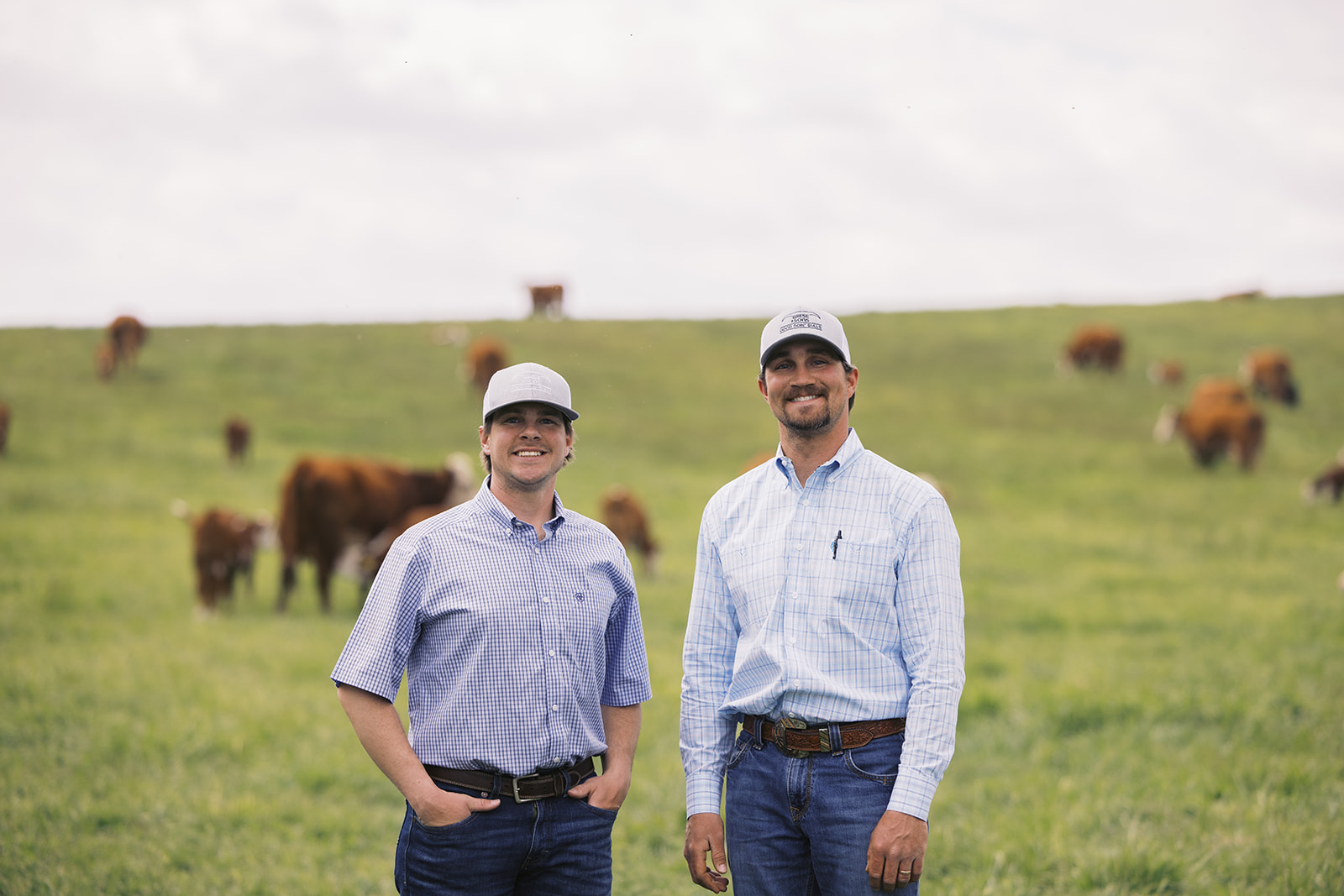
Wiese and Sons, of Manning, Iowa, are among those who have reaped the rewards of the partnership, with the family operation now genomically profiling its entire herd thanks to the “producer friendly” packages and prices Weatherbys provide.
“Genomic testing has really taken the risk out of our joining decisions and it’s giving our customers confidence that what they are seeing is backed up by the science,” Chance Wiese said.
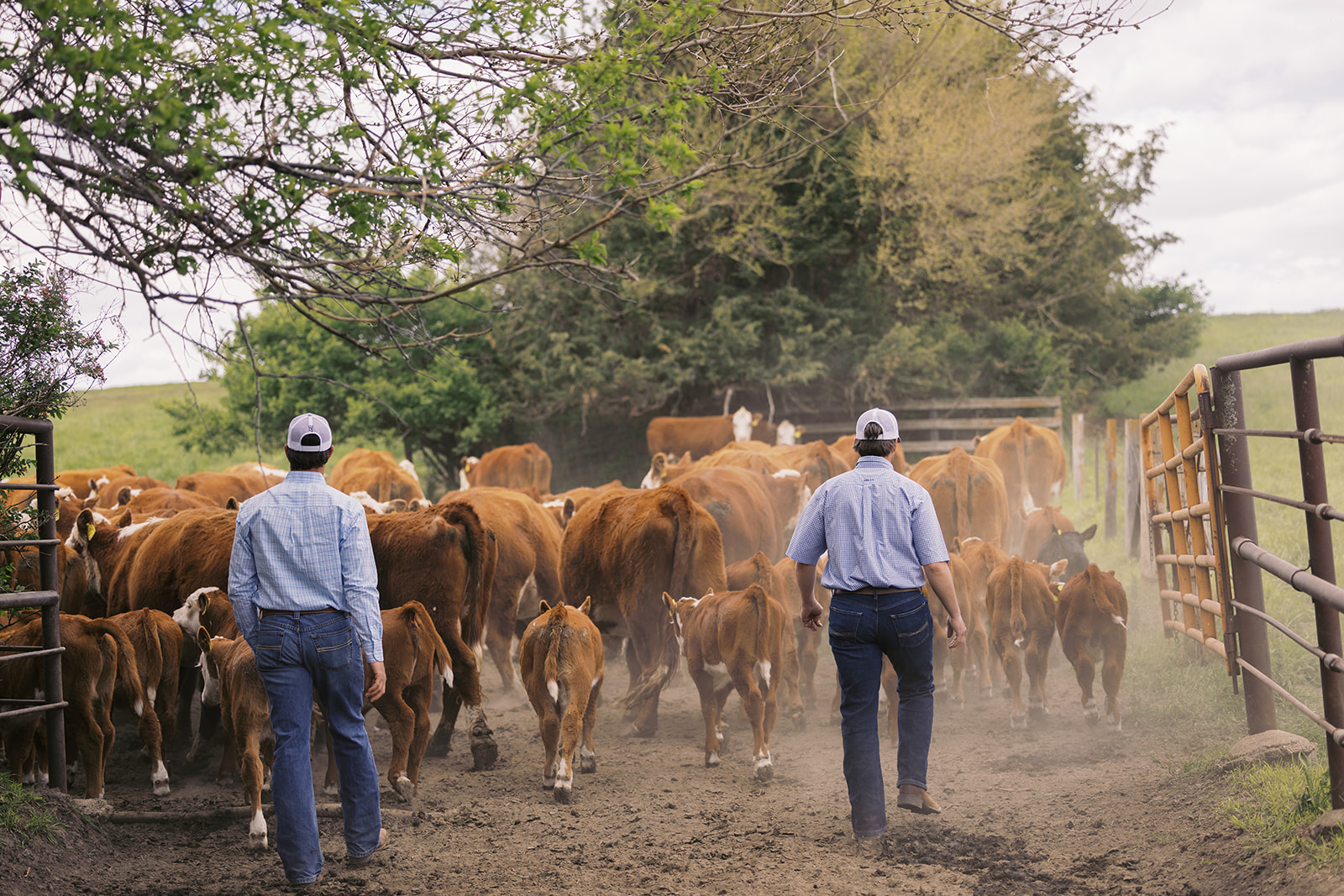
The Wieses sell about 90 Hereford and Poll Hereford bulls each year by private treaty to ranchers small and large throughout the Mid West.
With such a diverse clientele, Wiese and Sons Hereford bulls have to be adaptable to a variety of environmental conditions, including extreme heat and cold, and deliver productivity gains for a range of breeding programs and end markets.
The inclusion of genomic testing in the suite of tools the Wieses use when making their selection and joining decisions, has resulted in more even progeny with consistent performance across a range of traits.
“Overall, we’re looking to breed bulls that deliver good steer calves and quality replacement heifers,” Shayne Wiese said.
“We’re not breeding for extremities in any particular trait. We want a moderate, balanced animal that reduces headaches and makes our customers happy.
“We now have a more consistent profile among our animals and fewer ‘one hit wonders’, which means we can present an even, consistent line of bulls to meet the specifications our buyers are looking for.
“Because are bulls have more uniform genetic content, they’re turning off a good uniform set of calves for the sale ring.”
Family tradition meets modern science
The Wiese family has been breeding Herefords since 1894 when Ed Wiese – the great, great grandfather of Shayne, Chance and Trey – bought his first Hereford bull from outside of Guthrie Center, IA. In 1904 the family moved to Manning and since 1912 they have been breeding registered Hereford cattle.
The longevity of the family business is a testament to their focus on three core goals: breeding ‘good doing’ cattle that work for their customers; caring for the ecology of their land through responsible environmental stewardship; and pursuing these goals in a family-oriented way.
With this business philosophy, it was no surprise that the Wieses felt right at home in dealing with Weatherbys Scientific, which is also a family-owned and independent business, with more than 250 years of continuous operation in livestock industries and 40 years of experience in animal genotyping.
Weatherbys Scientific International Sales Director, Romy Morrin-O’Donnell, said the company’s goal was to deliver world-class, reliable and cost-effective DNA testing to U.S. beef producers.
“By taking a partnership approach with breed societies like the AHA, we’re able to seamlessly integrate our laboratory data with breed society systems, to ensure rapid turnaround times so producers can make smarter, faster, and more profitable breeding decisions,” Ms Morrin-O’Donnell said.
“We’re very proud of what’s been achieved with the AHA and to be celebrating the first-year anniversary of this great partnership here at BIF.”
A new tool in the selection toolkit
The Wieses ranch is set in highly fertile, rolling green hills, and in ‘normal’ years receives up to 40 inches of annual rainfall, which together supports a breeding herd of approximately 390 females (although both herd numbers and rainfall are down on average at the moment due to the widespread drought in the Mid West).
Their purebred Hereford herd is used to turn off approximately 90 stud bulls each year plus replacement heifers, with Angus bulls used over the bottom 25% of females to turn off F1 Baldy steers.
The Wieses weigh up a combination of observable traits like feet, leg and bone structure, to animal temperament, as well as genetic and genomic data on traits including calving ease, moderate birth weights and growth rates.
They initially trialled genomics in 2020 by testing just 30-40 of their replacement females for a range of genetic traits. Such was the value of the information that by 2022 they were testing all of their replacement heifers, and by 2025 the bulls as well.
And this year they have expanded their testing to include genetic defects and horn-poll in the genomic analysis reports to ensure there are no unexpected surprises for their customers.
Weatherbys producer-friendly approach a gamechanger
“What really sped things up for us in expanding our testing program was the AHA’s move to Weatherbys as its provider,” Shayne said.
“We’re very budget conscious in our business and Weatherbys offered a producer-friendly price structure.
“We did have reservations about the time it would take to obtain results from a company that’s not from the US, but if anything, the turnaround times have been quicker with Weatherbys and far fewer red flags pop up in terms of bad samples or analysis failures.”
Turnaround time is a critical issue for the Wiese breeding program, with tissue sampling taken at weaning, leaving little margin for error before joining decisions are made for the replacement females for the coming year.
“It’s a slow process to change your female herd but by utilising DNA testing we can understand the way the females will perform and the types of calves they will drop, much earlier in their career,” Shayne Wiese said.
“And by identifying problems earlier in life, we can make culling decisions much earlier in life too.”
Test results are reported as Expected Progeny Differences (EPDs), which is a prediction of how future progeny of each animal are expected to perform relative to the progeny of other animals. In combination with EBVs, which focus on describing the genetic differences in the selection candidates (sires and dams), the Wieses are able to confidently predict the whole-of-life performance of each drop of calves.
Chance Wiese said the Hereford breed as a whole was better off thanks to the increased data now being captured, which in turn was improving the accuracy of the records kept for reference populations.
“We are such big fans of Weatherbys,” Chance said.
“We get twice the amount of information than what we received before because we’re able to test double the number of animals thanks to their producer-friendly packages.
“Kudos to Weatherbys and the AHA on the partnership they have created.”